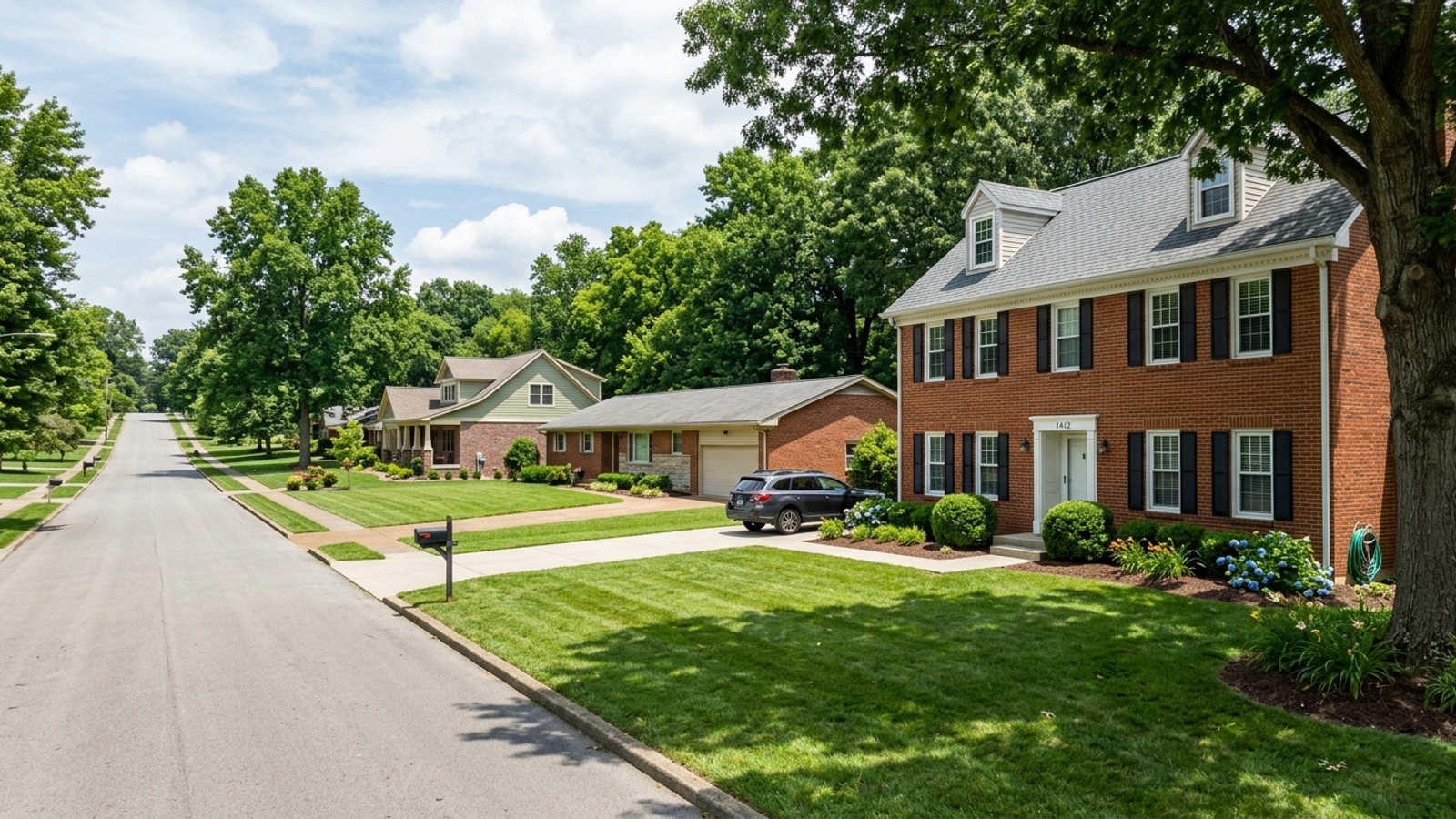
What to Expect From Weather Patterns in Prospect, KY
October 15, 2026
Prospect, Kentucky sits at an elevation of 495 feet along the Ohio River, and that location gives it a genuine four-season climate. Buyers coming into the Louisville metro area almost always want to know what they're signing up for in this specific corner of Jefferson and Oldham Counties. The local climate often factors into the pros and cons of living in Prospect.
The housing market moves at a steady pace right now, with homes spending roughly 46 days on the market before selling and a median sale price around $512,000. If you're planning a move at that price point, understanding what the seasons feel like here is worth your time before you start scheduling showings.
The Overall Climate in Prospect
Prospect falls into IECC Climate Zone 4A - what the federal building-energy code classifies as Mixed-Humid. That designation isn't just bureaucratic language. It means you get real seasonal shifts and noticeable moisture in the air through the warmer months, both of which affect how a home performs and what it costs to maintain.
The Ohio River Valley location drives a lot of this. Count on mild, wet springs, hot summers, crisp falls, and winters that lean more toward rain and light freezing than the heavy, grinding snow you'd see further north.
Summer and Winter Seasons
Summer is fully established by June and doesn't let go until late August. July is the peak - highs frequently approaching 90 degrees, warm nights that don't offer much relief. It's the kind of heat where you notice whether the house has good shade and whether the HVAC has been kept up.
Winter brings a real temperature drop, though prolonged deep freezes are less common here than in northern states. January is the coldest month, with average lows of 28 degrees and daytime highs that usually sit in the low 40s.
Spring and Fall Transitions
Spring moves steadily - March highs in the 50s, up to the upper 60s by April - and it brings plenty of rain along with the warming. The landscape greens up fast, which is pleasant, though the wet conditions matter if you're trying to schedule inspections or move furniture.
Fall is the most comfortable stretch of the year in this region. September holds onto some warmth with highs near 79 degrees, and October settles into a mild 68-degree average high. If you can control your timeline, this is the window most buyers enjoy.
Monthly Temperature Averages
The spread between Prospect's peak summer and deepest winter is wide enough that it affects utility bills, landscaping decisions, and what kind of mechanical systems a house needs. Getting familiar with the month-by-month pattern before you buy is just practical.
July is the hottest month, with average highs of 87 degrees and average lows around 78 degrees. January flips that entirely - average highs of 42 degrees, average lows of 34 degrees, with overnight dips to 28 degrees being entirely normal.
Month-by-Month Breakdown
The full progression gives you a clear picture of how the seasons move. February starts the slow thaw at 47/37, then March comes in at 57/47 and April at 68/57.
May reaches a comfortable 76/66 before summer takes over - June at 84/75, July at 87/78, August at 86/77. The cool-down starts in September at 79/70, picks up pace through October at 68/58 and November at 56/47, and settles into winter by December at 46/38.
Rain, Snow, and Precipitation Totals
Prospect gets roughly 39.8 inches of rain annually, spread fairly evenly across the calendar. May is the wettest month at 4.5 inches, and January is the driest at about 2.5 inches.
Buyers coming from colder climates often ask about road conditions and winter weather. Snow happens here, but it doesn't define the winters the way it does further north.
Annual Snowfall Expectations
The area averages roughly 9 inches of snow per year. February is the snowiest month, contributing about 3.1 inches to that total, followed by January at 2.8 inches and December at about 1.9 inches.
The rest of the year is essentially snow-free, with only trace amounts occasionally turning up in March or November. You're not buying a snowblower lifestyle here.
Severe Weather and Natural Hazards
Kentucky experiences thunderstorms and tornadoes, as does much of the Midwest and upper South. The state averages about 8.4 tornadoes per year, and Prospect is not exempt from that reality.
On April 2, 2024, the town took a direct hit from an EF2 tornado that caused major damage to the area. That's recent, and it's relevant to how you think about a home's roof, trees, and structural condition.
Preparing for Local Storms
Any inspection here should include a close look at roof age, tree proximity to the structure, and how the foundation drainage handles heavy rain. These aren't optional boxes to check - they're the questions that matter in this specific climate.
May's rainfall arrives alongside the kind of high winds that test gutters and grading. If a home's drainage isn't set up to move water away from the foundation, you'll know about it after the first hard spring storm.
Timing Your Move to the Area
Right now the Prospect market has roughly 32 available homes and 2.9 months of supply. Homes are selling at about 97.5% of their list price, and around 21% of homes recently sold above asking. The weather doesn't change that math - competitive offers are part of the deal regardless of the season.
That said, weather does affect the logistics of buying and moving, and the seasonal calendar here is worth factoring into your planning.
Best Months for Real Estate Activity
September and October are genuinely good months to be moving - mild temperatures, less rain than spring, comfortable enough to walk a property and pay attention. April and May work well for touring homes too, though you should expect frequent showers to complicate outdoor assessments.
If you're moving in July or August, plan around the heat and humidity - both will be real factors on moving day. January and February moves are manageable; just keep an eye on the forecast for the occasional snow system and build yourself some flexibility.
Frequently Asked Questions
What is the weather like in Prospect, KY year round?
Prospect has a Mixed-Humid climate with four distinct seasons. Summers are hot and humid with highs in the upper 80s, while winters are cold with average lows in the 20s and 30s alongside occasional light snow.
Does it snow in Prospect, KY, and how much?
Yes, it does snow, but accumulations are relatively light. The area averages roughly 9 inches of snow per year, with February typically being the snowiest month at about 3.1 inches.
Is it humid in Prospect, KY?
Yes, the area falls into a Mixed-Humid climate zone. Humidity is most noticeable during the summer months, particularly in July and August when temperatures peak.
Are there tornadoes or severe weather in Prospect, KY?
Yes, the region does experience severe weather. Kentucky averages 8.4 tornadoes annually, and Prospect experienced a direct hit from an EF2 tornado in April 2024.
When is the best time of year to move to Prospect, KY based on the weather?
Fall is generally the most comfortable time to move, as September and October offer mild temperatures and less rain than the spring. Spring is also pleasant, though May is the wettest month of the year.
Do homes in Prospect, KY typically require flood insurance?
It depends on the specific property's proximity to the Ohio River and local flood zones. Buyers should check the FEMA flood map for any specific address during the home search process.
How does the weather in Prospect compare to the rest of the Louisville metro area?
Prospect shares the same general Mixed-Humid climate as the rest of the Louisville metro area. Its elevation of 495 feet and location along the Ohio River mean its temperature and precipitation averages track very closely with the broader region.